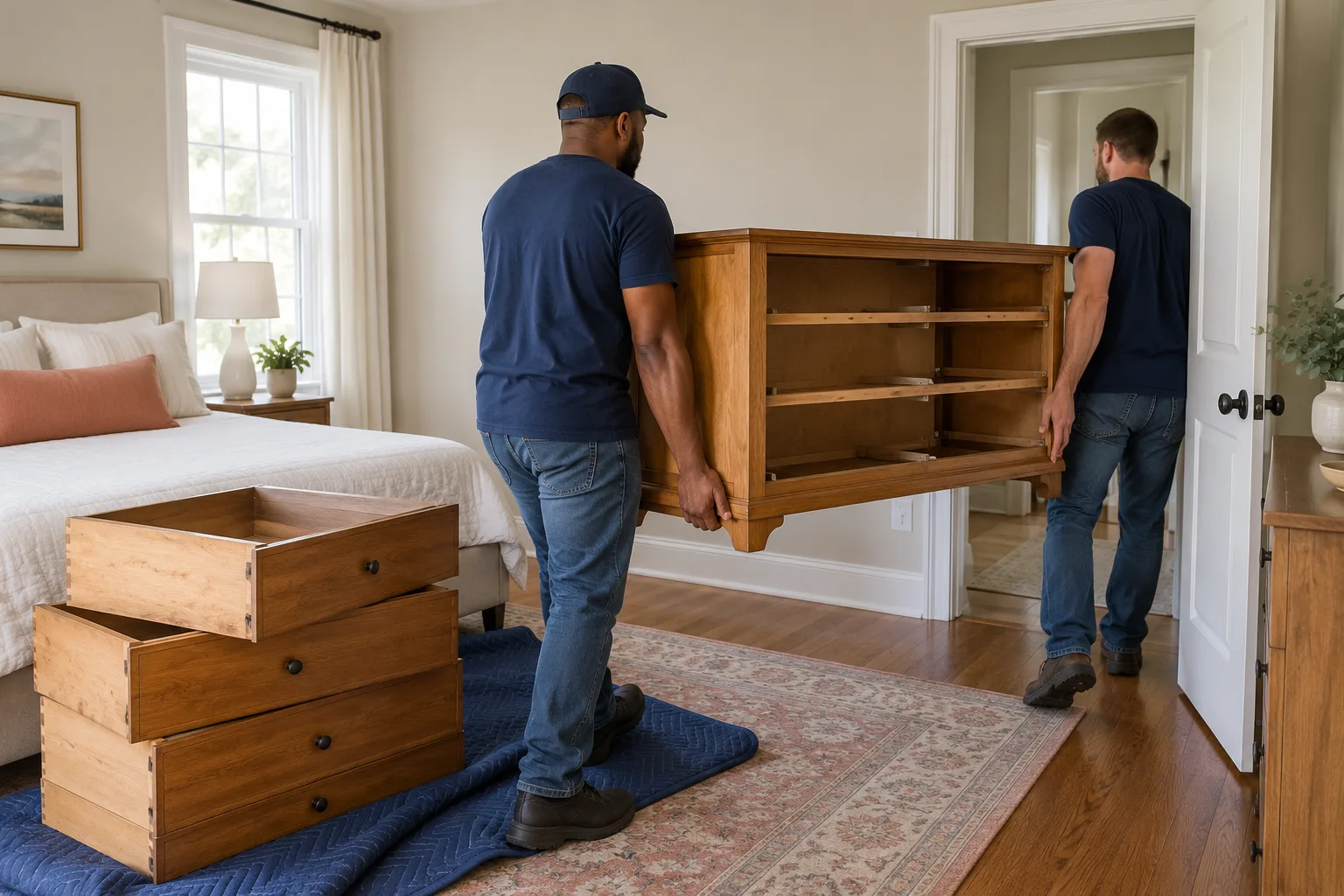
Empty furniture before removal day. Clothing is obvious, but the items that cause delays are usually inside small drawers, under liners, behind mirrors, or attached to the furniture. A clean inventory also prevents personal property from leaving by mistake.
Work from private to ordinary
- Remove medication, jewelry, cash, keys, and personal records first.
- Check false bottoms, jewelry trays, and the space behind drawers.
- Disconnect lamps, charging stations, televisions, and cable boxes.
- Remove freestanding mirrors and identify whether they are separate items.
- Take out loose shelves, glass, and drawers when that makes the route safer.
Mark what stays
Use a clear written list rather than relying on memory once the room is busy. Group items that stay on one side of the room and keep the exit path separate. If only some pieces of a matching set are leaving, photograph and name each one.
Measure the largest piece
A dresser may fit through a door only after its drawers are removed, while an armoire may need a different route entirely. Note the overall dimensions, the narrowest doorway, stairs, and whether the furniture can be safely separated.
Checklist for the first call
| Detail | What to report |
|---|---|
| Inventory | Type and count of each furniture piece |
| Condition | Loose doors, glass, damage, or unstable parts |
| Access | Floor, stairs, elevator, hallway, and parking |
| Special pieces | Safes, powered furniture, attached mirrors, or unusually heavy items |
Use the guide on the actual job
Review the companion bedroom furniture removal service scope, then use the estimate preparation page to organize the item and access details.